
If you ask three web designers how much a small-business website costs, you may receive three completely different answers: $2,500, $7,500 and $30,000.
That does not necessarily mean one person is overcharging or another is offering a bargain. In many cases, those proposals are describing very different levels of strategy, design, development and responsibility—even when each one says “five-page website.”
I’m Vadim, the founder and creative director of Bozh Studio. After more than a decade in design and working on more than 300 websites across Squarespace, WordPress, Shopify and custom platforms, this is what I actually see clients being quoted—and what we typically charge.
Pricing and service details in this guide are current as of August 2026. The ranges come from Bozh Studio projects and quotes shared with me by clients in the United States. They are not guaranteed prices for every project.
Although this guide begins with the common “small business website” question, it is also written for growing and midsize companies. Several of the real projects below involve established organizations, multiple teams, deeper content systems and budgets above $10,000.
The quick answer
In 2026, a small-business website can cost anywhere from about $1,000 for a professionally finished, AI-assisted landing page to $30,000 or more through a larger agency.
At Bozh Studio, most complete small-business website projects fall between $2,500 and $7,500. Midsize and more complex organizational projects involving custom UX, Figma design, integrations, database functionality or several teams often begin around $10,000 and can move beyond $15,000.
| Project scope | A realistic range from my experience | Usually best for |
|---|---|---|
| DIY software and hosting only | Often under $1,000 in direct costs, excluding your time | A new business with simple needs and the ability to build and test the site itself |
| Professionally directed landing page | $1,000–$2,500 | A focused offer with a clear audience and limited functionality |
| Core five-page business website | $2,500–$5,500 | A service business needing a polished, dependable website |
| Custom CMS or portfolio website | $5,500–$10,000 | A business needing custom design, editable content systems or integrations |
| Advanced organizational or agency project | $10,000–$30,000+ | Multiple teams, deeper UX, migrations, databases and advanced functionality |
These figures are not fixed industry averages. They are based on the quotes clients bring to me and the projects I encounter.
Provider labels overlap, too. An experienced freelancer can charge more than a lean studio, and a small studio may deliver a custom project for much less than a large agency. Compare the actual scope and responsibility—not just the label on the proposal.
How these prices compare with other 2026 cost guides
My ranges are based primarily on firsthand project experience, but it is useful to compare them with broader published pricing data.
- Clutch’s 2026 Web Design Pricing Guide reports that agency projects can range from roughly $2,000 to $100,000, depending on scope and complexity. Most of the web-design projects reviewed on its platform cost less than $10,000.
- Forbes Advisor’s 2026 website-cost guide separates software costs from professional help. It estimates a basic DIY build at up to several hundred dollars before counting the owner’s time, while professional website design generally begins around $1,500 and can rise substantially with added design and functionality.
Those published ranges line up closely with what I see. A focused professionally directed landing page can begin around $1,500, many complete small-business websites fall between $2,500 and $7,500, and advanced agency projects can move well beyond $10,000.
The guides also reinforce the main point of this article: the headline price is only meaningful when you understand the strategy, content, functionality and ongoing responsibility included in it.
The more useful question is not simply, “How many pages am I getting?” It is, “What does this website need to accomplish, and who is responsible for making that happen?”
What does each website price level actually buy?
$500–$1,500: focused improvements or one clear landing page
At this budget, I would normally recommend keeping the scope very focused.
That might mean:
- Fixing bugs or mobile-layout problems on an existing website
- Improving a homepage or important service page
- Making a set of design and content updates
- Building one well-structured landing page
- Connecting a domain, forms, analytics and basic SEO settings
Bozh Studio has completed smaller rounds of improvements starting around $500. A straightforward landing page can begin around $1,500, particularly when the business already has its branding, copy and direction prepared.
Trying to force a ten-page custom website into this budget usually creates compromises. A focused, polished page is often more useful than a larger site filled with rushed content.
Around $2,500: a strong five-page service-business website
The number I hear most frequently for a standard five-page website is approximately $2,500. Clients often tell me they received a quote around this amount from a freelancer, regardless of whether the website is being created in Squarespace, WordPress or Shopify.
At Bozh Studio, $2,500 is also our typical starting point for a basic five-page Squarespace website. That is not just five pages placed into a template. It normally includes:
- Design strategy and visual direction
- Page structure and user flow
- Responsive design for desktop, tablet and mobile
- Contact forms and essential functionality
- Foundational on-page SEO setup
- Launch preparation and quality assurance
This range can work well when the website has a defined purpose, the client can provide content promptly and the functionality is relatively standard.
$3,500–$7,500: WordPress, custom design and more involved functionality
WordPress projects at Bozh Studio generally begin around $3,500, while a more custom WordPress website commonly starts around $5,500.
This level may include:
- A custom visual direction rather than a lightly adjusted template
- An editable WordPress content management system
- Individual service, project or portfolio templates
- More extensive page architecture
- Custom forms or interactive elements
- Migration from an old website
- URL redirects and launch planning
- Performance and technical SEO foundations
A website can begin at $5,500 and finish closer to $7,500 when the scope expands through additional portfolio entries, coded functionality, new page types or extensive revision rounds. That is why a detailed proposal matters: it gives both sides a shared definition of what is included.
$10,000 and up: advanced or enterprise-level websites
Larger website projects usually involve more than visual design. They may require discovery meetings with several teams, user-flow planning, wireframes, custom Figma design, database integrations, migration strategy and coordination with marketing or SEO partners.
At Bozh Studio, projects of this kind generally begin around $10,000.
I also know larger agencies that will not accept a website project below $30,000. Sometimes those agencies refer smaller projects to us, and we may be able to complete the appropriate scope closer to $5,500–$15,000.
A larger agency is not automatically better for every business. You may be paying for a larger research process, more specialists, project-management layers and greater overhead. Those resources can be valuable for a complex organization, but they may be unnecessary for a five-page local-service website.
What changes when the client is a midsize business?
Company size alone does not determine the quote. A midsize business website usually costs more because the website carries more responsibility and more people are involved in getting it right.
Compared with a straightforward small-business website, a midsize project may require:
- Interviews and approvals across leadership, marketing, sales or operations teams
- A larger information architecture for services, markets, resources and company content
- Custom Figma wireframes and UX work before development begins
- CRM, database, recruitment, investor or other third-party integrations
- Migration of an established blog, portfolio or resource library
- Careful redirects, analytics and SEO coordination during launch
- More extensive accessibility, security and quality-assurance requirements
- Training and documentation for several content editors
This is why projects such as Tantalus and Golden State ADUs sit in a different tier from a focused five-page website. The higher budget is not based on employee count alone; it reflects the additional systems, stakeholders and launch risk the studio is responsible for managing.
Does using AI make a website cheaper?
It can—but AI reduces production time, not responsibility.
AI tools can help create clean HTML, JavaScript, animations, structural components and custom features. They can also help organize copy or accelerate repetitive development work.
What they do not automatically provide is a clear brand point of view, a thoughtful customer journey or good judgment. For a website expected to generate leads or represent an established brand, AI still benefits from a human creative director who can decide what the site should say, how it should feel and whether the finished experience supports the business goal.
Transfire is a good example. It cost approximately $1,500 and used AI-assisted HTML alongside WordPress CMS functionality and selected plugins. The CMS allowed routine updates without requiring the client to edit code. Compared with the roughly $4,500 I would normally quote for a similar project using a traditional design-and-development workflow, I estimate that AI reduced this project’s production cost by about $3,000.
Our own website-maintenance page is another example. I created the brand direction, page structure and visual design, while AI helped implement JavaScript, GSAP animation and parts of the build. A comparable client project would have a value of approximately $5,000. It was not literally free—it required our studio time—but it allowed us to produce the page internally much more efficiently.
The important distinction is that neither website began with a generic prompt and ended with an untouched AI result. AI was part of the production process, while the strategy, content, design direction and final quality control remained human-led.
For a deeper look at that approach, read AI Website Builder vs. Web Designer: Which Is Better for a Service Business?
Real website pricing examples from Bozh Studio
Here are several projects from our website and branding portfolio and their approximate historical budgets, shared with permission. “Simpler” in this context means the scope or technical requirements were more focused—not that the design quality was unimportant. Every figure is project-specific and should not be read as a current guaranteed quote.
Focused Squarespace websites
PCARD Payments: approximately $3,500
This was a complete B2B payment-program website. Squarespace and a lower page count helped keep the project at a more accessible price. A larger page structure, deeper integrations or a custom WordPress build would have increased the budget.
Remont Construction: approximately $5,500
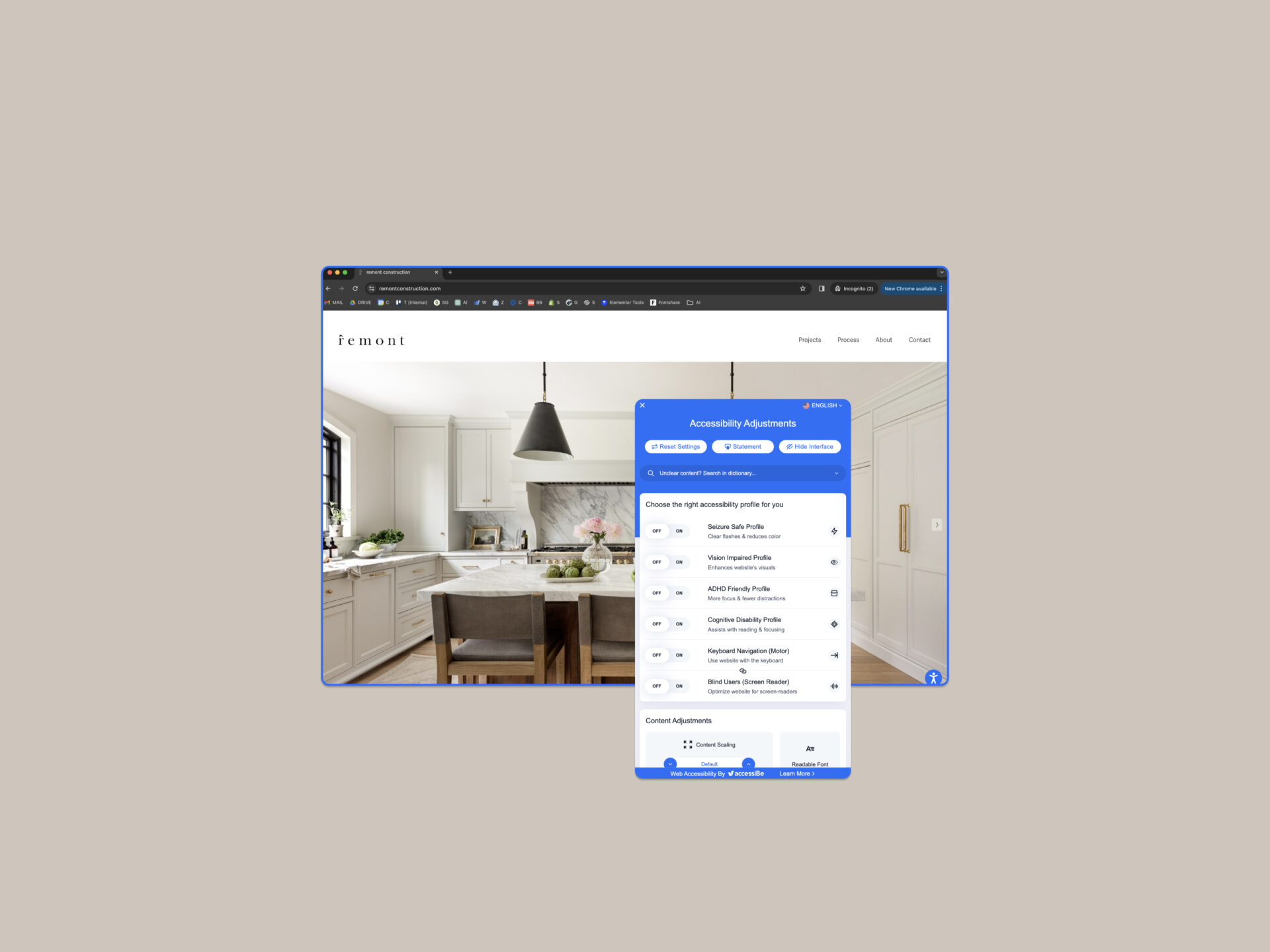
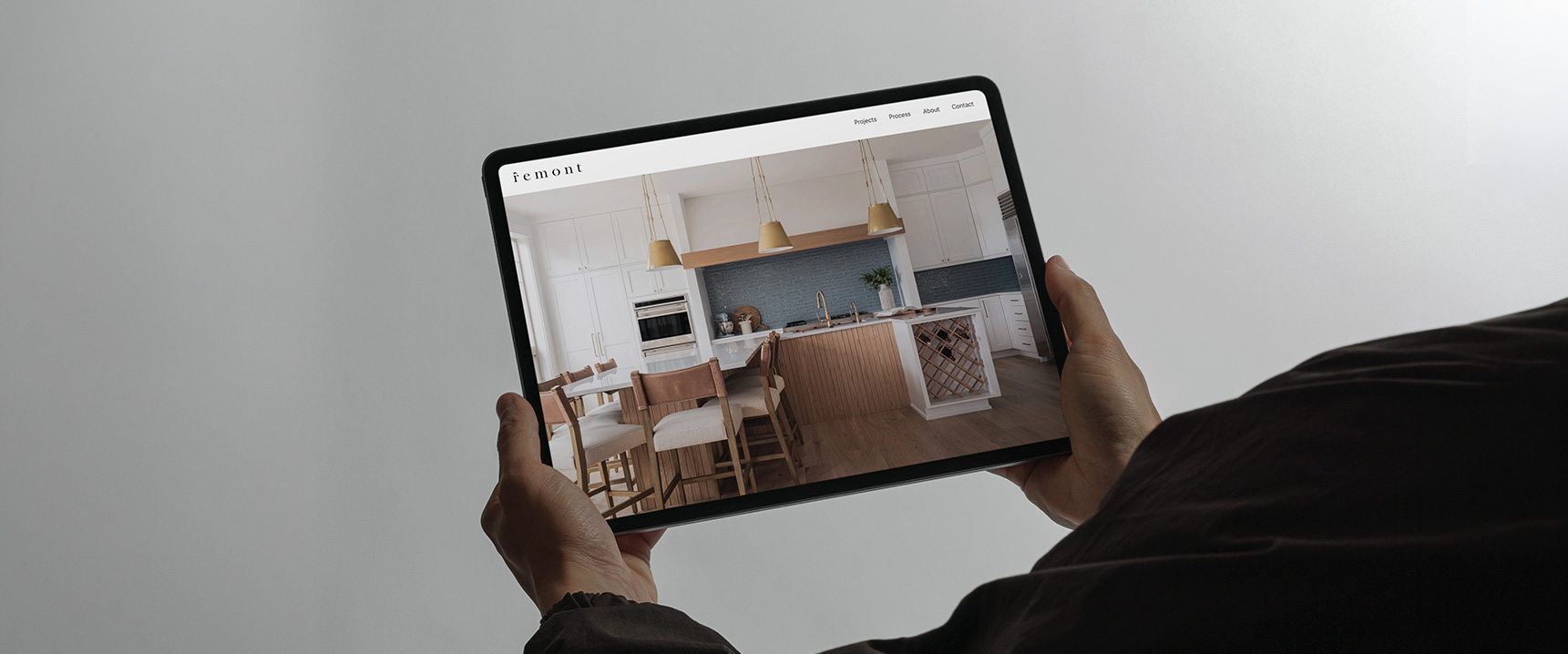
This was a complete Squarespace build for a construction service business, including project-portfolio pages and a clean, architecture-inspired visual flow. The platform was efficient, but the design strategy and portfolio structure still required careful creative direction.
Custom WordPress websites
Tradesmen Construction and Valley Design & Construction: approximately $5,500 starting scope
These represent the kind of custom WordPress project we often build for service businesses that need stronger visual positioning, flexible portfolio content and an editable CMS.
RMG Housing: approximately $7,500
This project began with a base scope around $5,500. Additional revision rounds, coded features and portfolio content expanded the final investment. It is a useful example of how a project can grow when the requirements develop during the design and build process.
Advanced and enterprise websites
Tantalus: approximately $12,000
This custom WordPress project included an editable CMS backend, server setup and maintenance considerations for a technology company with a much deeper content structure than a standard small-business website.
Golden State ADUs: approximately $15,000
This project included custom Figma design, UX planning, styling and page-flow work, a custom model-selection form with database integration, redirects from the old website and collaboration with a separate SEO team.
The price difference between these projects is not simply the number of pages. It is the number of decisions, systems, stakeholders and technical responsibilities involved.
Seven factors that affect website cost most
1. The number of unique page types
Ten pages using the same layout may require less work than five pages that each need a completely different structure. Homepage, service, portfolio, team, blog and landing-page templates all involve different design and content decisions.
2. Custom design versus an adapted platform
Squarespace can be an excellent choice for a polished service-business website with relatively standard needs. A custom Figma-to-WordPress process requires more time because the system, layouts and responsive behavior are designed around the business rather than an existing structure.
3. Whether the content is ready
A project moves differently when the client arrives with approved copy, professional photography and a clear offer. If the designer must help define the messaging, organize incomplete content or source imagery, that work needs to be reflected in the scope.
4. CMS and portfolio requirements
A business that regularly adds projects, services, team members, locations or articles needs a thoughtful CMS. Building those editable systems takes more work upfront but gives the business far more control after launch.
5. Forms, databases, e-commerce and integrations
A basic contact form is very different from a pricing calculator, model selector, member portal, online store or form connected to an external database. Custom behavior introduces development, testing and long-term maintenance considerations.
6. SEO migration and URL redirects
Redesigning an established website requires more care than launching a new domain. Existing URLs, search visibility, metadata, analytics, tracking and redirects must be considered so the launch does not unnecessarily lose years of search history and useful links.
Foundational SEO can be included in a website build, but ongoing SEO strategy, content creation and link acquisition are usually separate services. No responsible designer should guarantee rankings simply because a website has been launched.
7. Revisions, stakeholders and timeline
A founder-led business may be able to approve a direction quickly. A project involving executives, marketing teams, sales teams and outside partners requires more meetings, documentation and revision cycles. A compressed launch timeline can also require additional resources.
Which website platform gives you the best value?
There is no single platform that is right for every business.
For a more detailed platform comparison, read Squarespace vs. Webflow vs. WordPress.
Squarespace
Squarespace is often the most efficient choice for a polished service-business website with a manageable page count and standard functionality. It includes hosting and makes routine editing relatively straightforward.
WordPress
WordPress is a strong choice when you need flexible content management, portfolio systems, blogging, landing pages or deeper integrations. It requires more attention to hosting, security and updates, but it offers more control.
AI-assisted HTML with a CMS
AI-assisted development can be valuable when you want clean code, fast production or custom interactions. I generally prefer combining it with a usable CMS so the client is not forced to edit HTML or depend on another AI tool every time they need to update a sentence or image.
Fully custom development
Fully custom development makes sense when the business has requirements that standard platforms cannot serve well. It should solve a real operational or customer-experience problem—not add complexity simply to make the proposal sound more advanced.
Website costs people forget after launch
The design and build are not always the complete cost of owning a website. Depending on the platform and agreement, you may also need to budget for:
- Domain registration
- Website hosting or platform subscriptions
- Premium plugins and software licenses
- Professional photography, video or copywriting
- Backups, security monitoring and software updates
- Content changes and new landing pages
- Ongoing SEO, analytics or marketing
Bozh Studio also offers optional website-maintenance plans at $300 or $500 per month, depending on the number of included revisions and the level of ongoing support. We also complete follow-up work at $120 per hour or through fixed scopes beginning around $500.
Before signing a website proposal, ask which ongoing expenses are included and which will be billed separately.
What I would recommend at each budget
- Under $1,500: improve the most important part of an existing site or build one focused landing page.
- $2,500–$5,500: prioritize the core pages, messaging and conversion path for a service business.
- $5,500–$10,000: invest in a more original design system, flexible CMS, case studies and useful custom functionality.
- $10,000 and up: use the budget for deeper research, UX, integrations and careful migration—not complexity for its own sake.
Questions to ask when comparing website quotes
When two proposals have very different prices, ask whether each one includes:
- Strategy and page planning
- Custom design or an adapted template
- Copywriting or content organization
- Mobile and tablet design
- CMS setup and training
- Contact forms and integrations
- Technical and on-page SEO foundations
- Google Search Console and analytics setup
- Migration and URL redirects
- Performance, browser and device testing
- Revision rounds
- Hosting, software licenses and maintenance
- Ownership of the domain, content and website accounts
A lower quote can be the right choice when the scope is genuinely smaller. Problems arise when a proposal is inexpensive because important responsibilities were never discussed.
Frequently asked questions
How much should a five-page small-business website cost?
From what I see, approximately $2,500 is a common starting point for a professionally designed five-page website. The price rises when the project includes custom visual design, copywriting, WordPress development, integrations, migration or more involved strategy.
Does website pricing include SEO?
It depends on the proposal. Bozh Studio builds in technical and on-page SEO foundations appropriate to the scope, but ongoing SEO, regular content and authority building are separate disciplines. Always ask exactly what “SEO included” means.
How much does website maintenance cost?
Maintenance varies based on the platform, update frequency and amount of hands-on support. Bozh Studio currently offers plans at $300 and $500 per month, along with fixed-scope and hourly options.
Final thoughts
I do not believe every small business needs a $15,000 website. I also do not believe every midsize company needs a $30,000 agency engagement—or that the lowest quote is automatically the best value.
The right investment depends on what the website needs to accomplish, how much custom work is involved and what the business is prepared to support after launch. A focused $2,500 website can be the right decision for one business, while another may genuinely need the strategy and systems behind a $15,000 build.
At Bozh Studio, we try to work backward from the goal and the available budget. Sometimes the right answer is a landing page. Sometimes it is Squarespace. Sometimes it is a custom WordPress CMS with a deeper design and development process.
If you run a small or midsize business and already have a budget but are unsure what scope makes sense, send Bozh Studio your current website, goals and approximate budget. I will tell you honestly what I would prioritize—and whether we are the right fit for the project.