
AI website builders have made creating a website faster and more accessible than ever. A business owner can enter a prompt, select a style, and generate a functioning website in minutes.
Does that mean service businesses no longer need professional web designers?
As a web designer who uses both traditional design methods and AI-assisted development, my honest answer is: it depends on what your website needs to accomplish.
If you simply need an online presence, an AI website builder may be enough. If your website needs to establish trust, differentiate your business, rank for valuable searches, and consistently generate inquiries, human strategy becomes much more important.
Let’s examine where AI excels, where it still struggles, and how to decide which approach is right for your business.
AI website builder vs. web designer: the short answer
Here is the simplest way to compare an AI website builder with a professional web designer:
If your website is mainly an online business card, AI may be enough.
If your website needs to work like a salesperson, professional strategy becomes much more valuable.
AI is capable of generating layouts, copy, code, images, and custom functionality. What it cannot independently understand is the full context behind your business, customers, reputation, goals, and competitive environment.
That context is what turns a collection of attractive sections into an effective business website.
What AI website builders do well
AI is an incredibly useful website design and development tool. At Bozh Studio, I use AI to make parts of my process faster and more efficient.
AI can help with:
- Generating and refining code
- Developing custom website features
- Exploring possible page structures
- Producing early content drafts
- Improving existing website copy
- Troubleshooting technical problems
- Creating structural components
- Accelerating repetitive development work
Tools such as Claude can produce clean HTML, CSS, and JavaScript surprisingly quickly. When used correctly, this can contribute to a lightweight, fast-loading website.
For a new business that needs to get online quickly, this is valuable. AI can reduce the time and technical knowledge required to create a basic professional presence.
Why do so many AI websites look the same?
AI usually begins with patterns it has encountered repeatedly. As a result, its first solution is often the most statistically common solution.
That is why many AI-generated websites use a familiar formula:
- Oversized headline
- One-sentence subheading
- Gradient call-to-action button
- Three or four feature cards
- Generic icons
- Predictable testimonial section
- Repeated claims about “elevating” or “transforming” a business
There is nothing inherently wrong with those elements. Many traditionally designed websites use them too.
The problem appears when every decision is generic. The website may look polished, but it doesn’t communicate anything memorable about the business.
It could belong to a contractor, consultant, software company, marketing agency, or financial advisor. Change the logo and a few sentences, and almost nothing else needs to change.
For a service business, that sameness can make it harder to build trust.
What does a professional web designer provide?
The role of a web designer is changing. Knowing how to place text, images, and buttons on a page is no longer enough.
A good designer should act as a strategic creative director.
That involves understanding:
- What the business is trying to achieve
- Which customers it wants to attract
- What those customers are worried about
- Why they should trust the company
- How the business differs from its competitors
- Which information visitors need before making contact
- How the brand should look, sound, and feel
- What action each page should encourage
AI can generate possible answers to these questions. A designer works with the business to discover which answers are true and important.
The value isn’t simply making a website look less robotic. It is connecting the visual design, content, technology, and user experience to a real business goal.
How Bozh Studio combines AI with custom web design
There is no single correct process for building every website.
For some projects, I begin with a traditional design process:
- Business and customer discovery
- Initial concepts on paper
- Website structure and content planning
- Custom design in Figma
- Development
- Testing, refinement, and launch
For other projects, I combine paper sketches, Figma, WordPress, and AI tools such as Claude.
AI may help me generate a structural component, develop a custom interaction, explore a technical solution, or refine a piece of code. However, AI doesn’t make the final creative decisions.
I continue to direct the:
- Website strategy
- Information hierarchy
- Copy and messaging
- Colors and typography
- Brand personality
- Visual composition
- Functionality
- User journey
- Final details
This process gives me the efficiency of AI without handing the identity of the business over to an automated template.
Examples of AI-assisted websites
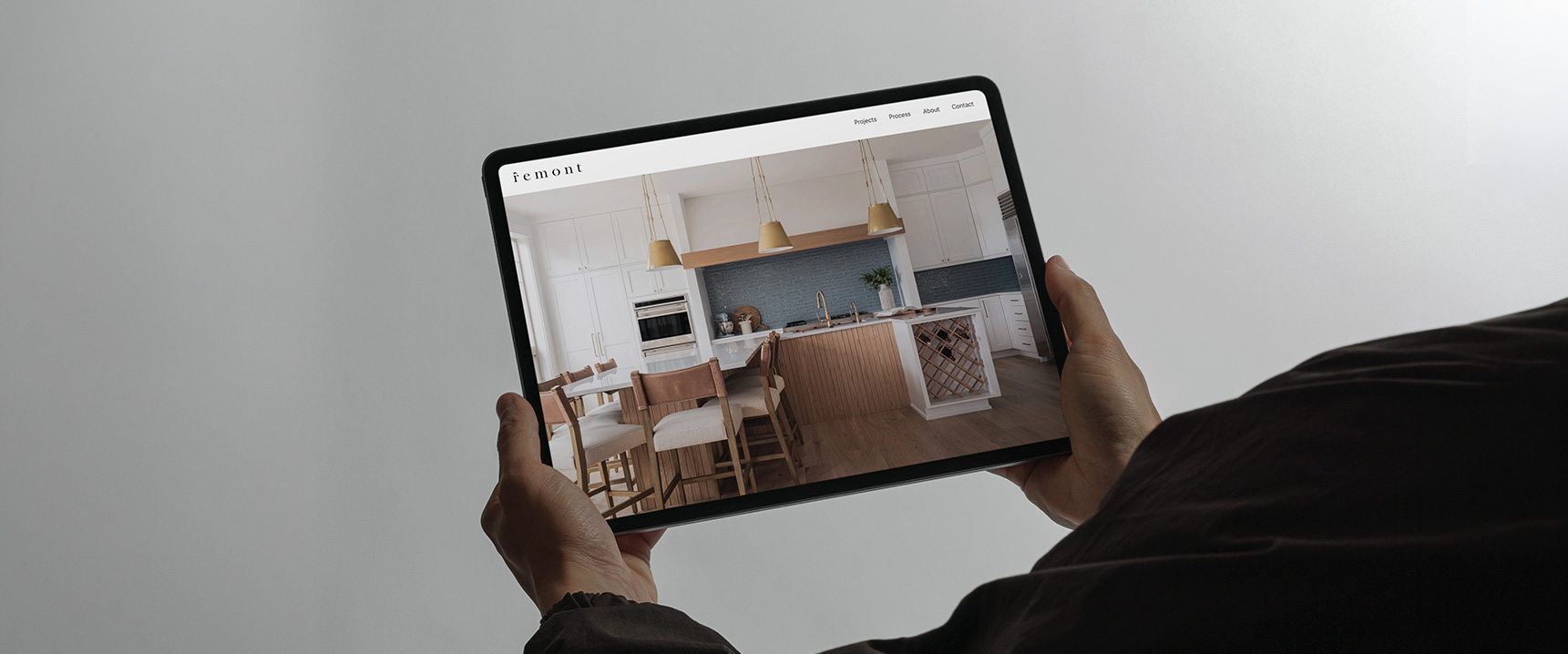
Several recent projects demonstrate how I incorporate AI into a professionally directed process.
Transfire Logistics
Transfire Logistics needed more than an attractive logistics template.
Its website had to communicate specific services, including pool distribution, LTL final-mile delivery, and FTL brokerage. It also needed to establish its service area, operational experience, customer-first positioning, and ability to provide shipment visibility.
AI assisted with parts of development, but the final website required business-specific messaging, structure, visual direction, and refinement.
NWF
The NWF website also used AI-assisted development alongside human design direction.
The initial generated components provided a useful foundation. They still needed editing and refinement to create a cohesive website rather than a collection of unrelated sections.
Bozh Studio website maintenance page
AI also helped with aspects of the Bozh Studio website maintenance page.
The tool supported production, while I remained responsible for how the service was structured, presented, and connected to the rest of the Bozh Studio website.
Across these projects, AI accelerated parts of the process. Human creative direction made each result feel intentional and specific.
The CMS issue business owners often overlook
Launching the website is only the beginning. A business also needs to consider how the website will be managed afterward.
Some AI website platforms provide a visual editor or proprietary content system. Others generate static HTML, CSS, and JavaScript that may not include a practical content management system.
Without a CMS, seemingly simple updates can become difficult. A business may eventually need to:
- Add portfolio projects
- Publish articles
- Update service descriptions
- Replace images
- Add team members
- Create location pages
- Change pricing
- Add testimonials
- Update calls to action
- Build new landing pages
If the website consists primarily of code, the owner may need to understand that code, hire someone to change it, or depend on another AI prompt. Each new prompt also creates the possibility of changing or breaking something unintentionally.
For many Bozh Studio projects, I combine custom design and AI-assisted development with WordPress.
WordPress provides the CMS, allowing the client to manage selected content manually. The website can still have a custom appearance and custom features, but the owner is not locked out of everyday content.
The right setup depends on the business. The important thing is to make this decision before building the entire website.
Is an AI website good for SEO?
An AI-built website can have a solid technical SEO foundation. It can be fast, mobile-friendly, logically structured, and built with clean code.
However, those qualities don’t automatically create strong search rankings.
Effective search engine optimization also depends on:
- Understanding what potential customers search for
- Choosing appropriate topics and keywords
- Creating original, helpful content
- Organizing services into useful pages
- Writing clear titles and descriptions
- Building relevant internal links
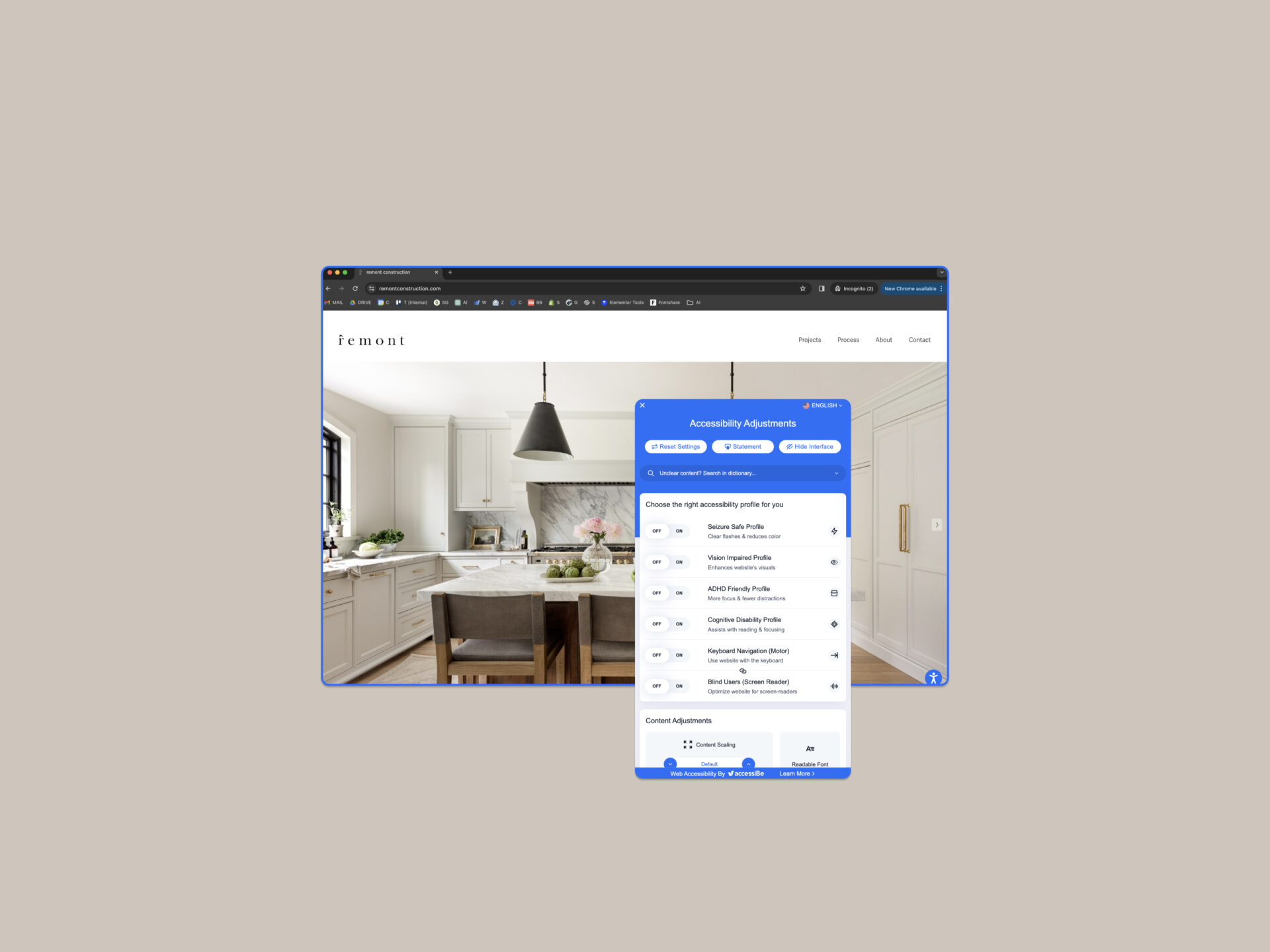
- Optimizing images and accessibility
- Establishing local and industry relevance
- Earning trust and authority over time
- Measuring performance and improving the website
AI can assist with these activities. It cannot guarantee rankings, and neither can a web designer.
A technically clean website creates a foundation. An informed SEO and content strategy determines how that foundation is used.
When should you use an AI website builder?
An AI or DIY website may be the right choice when:
- You are validating a new business idea
- Your available budget is extremely limited
- You only need a basic online presence
- You need to launch as quickly as possible
- Most customers already come through referrals
- You are comfortable learning and managing the tools
- The website is not currently responsible for generating leads
- A generic template will not damage your positioning
There is nothing wrong with starting this way. A simple website that is live is often more useful than an ambitious website that never launches.
The important thing is to understand what you are—and are not—expecting the website to do.
When should you hire a professional web designer?
Professional website design becomes more valuable when:
- Your website needs to generate qualified inquiries
- Customers compare you directly with multiple competitors
- Trust plays an important role in purchasing your service
- One new customer is worth a meaningful amount
- Your service is complex or difficult to explain
- Your current website receives traffic but produces few leads
- Your company looks interchangeable with competitors
- You need custom features or integrations
- Your team needs a manageable CMS
- Your brand has outgrown a generic template
- You need help connecting design, messaging, SEO, and business strategy
Hiring a professional does not mean rejecting AI. It means putting someone in charge of deciding how and where AI should be used.
Can a web designer improve an existing AI website?
Yes. You don’t necessarily need to discard everything you have already created.
At Bozh Studio, the process can begin with:
- An AI-generated website
- An early design concept
- A collection of prompts and ideas
- Existing copy
- A WordPress website
- A static HTML website
- A partially completed Figma design
From there, I can evaluate what is worth keeping, what needs improvement, and which platform or content-management approach makes the most sense.
In some cases, the best solution may be refining and properly hosting the existing AI website. In others, it may be combining the best ideas from that draft with a custom design and WordPress CMS. Some businesses may benefit from starting over completely.
The process should fit the business—not force the business into one predetermined workflow.
AI versus web designers is the wrong debate
I don’t believe the future is AI versus web designers.
AI is becoming part of the professional process, just as website builders, design software, and content-management systems did before it.
The more useful question is:
Who is directing the process, and do they understand the business behind the website?
AI can make website production faster. A designer can make the outcome more intentional, distinctive, manageable, and connected to the company’s goals.
The best approach may be entirely AI-assisted, entirely custom, or a thoughtful combination of both.
At Bozh Studio, we can work with an existing AI draft, improve and host an AI-built website, combine AI-assisted development with WordPress, or design and build the entire experience from scratch.
What matters is choosing the approach that supports what your business actually needs the website to do.